For though by this time you ought to be teachers, you have need again for someone to teach you the elementary principles of the oracles of God, and you have come to need milk and not solid food. (Hebrews 5:12 NAS)
 The four seasons are often thought of by many as distinct phases in a year. Spring is a time for new life or rebirth, summer for warmth and growth, fall for harvest and gathering, and winter for sleep, rest and death. According to an article at IndepthInfo.com, the variance in temperature and climate on the earth during the different seasons is largely because of the tilt of the earth. As the earth circles the sun, the axis tilts more toward or away from the sun. This tilt consistently points in the same direction regardless where the earth is positioned in the orbit and determines the warming and cooling in a seasonal cycle.
Like the seasons in a year which spring forth from new life to growth, harvest, and then decay, the seasons of human life also spring forth different experiences, strengths and weaknesses during the different stages of our lives. Challenges of different sorts are faced during the different stages, and we learn to handle them differently as we grow in maturity. This is normal because while we were children, we behave, speak, think and reason like children, but when we become adults, we do away with childish things (1 Corinthians 13:11).
Unlike the seasons which run a new cycle after each year, however, the seasons of human life—including our lives—follow through linear progression from childhood to eventual death without any cycle. The Bible states very clearly it is appointed for men to die once, and after this comes judgment (Hebrews 9:27).
Knowing this, therefore, we should not let ourselves become too accustomed receiving milk or elementary principles, for anyone who lives on milk is not acquainted with the teaching of righteousness (Hebrews 5:13). We should instead seek to progress and grow in spiritual maturity to consume solid food, which is for the mature who because of practice have their senses trained to discern good and evil (Hebrews 5:13-14).
If we have known the Lord for many years, then by this time we ought to be teachers or capable of nurturing others. If we are unable to do so, it is likely we have not been putting enough effort to the study of God’s word. If we today are still making decisions that follow our old ways before we know the Lord, then we are like children who are unacquainted with the teachings of righteousness and in need of basic truths (Hebrews 5:12). If we think it is understandable or try to justify ourselves that we are doing so because we can only see God’s plan vaguely at this time, we have forgotten we are not without guidance. The word of God is enough at this present time for us to know the path, and some day face to face with our Lord, we shall know fully, just as we are fully known by Him (1 Corinthians 13:12).
Let us therefore, while waiting for our Lord’s return, not be like children or infants. Instead, let us be like the tilt of the earth to always point in the same direction regardless of our circumstances in our pursuit to study God’s word. Let us determine in our hearts to know more of Christ our Lord and grow in spiritual maturity. Just as the earth circles around the sun, let us also surround everything we do according to God’s word and will. Through all circumstances—warm or cold—let us not hibernate or stay in infancy, but grow and progress in faith to achieve God’s goal for our lives.
Dear Lord, forgive us for sometimes behaving like children, always expecting to be fed rather than to grow up to feed others. Lay the seed and grow in us Lord the knowledge of Your word that as we grow in years, we may also grow in spiritual maturity. Put in our hearts the determination to want to know You more through the in-depth studying of Your word. Remind us Lord to seek Your will every time we want to make our own decisions without the knowledge of Your word. Help us Lord to always point in the same direction towards fulfilling Your will in all we do, and in all circumstances acknowledge You.
The heavens are telling of the glory of God; And their expanse is declaring the work of His hands (Psalm 19:1 NAS)
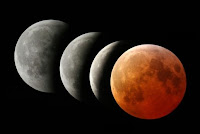 On December 20, 2010, The New York Times published a story about the lunar eclipse of the moon that was to take place the following day. According to the news story, the earth will prevent the sun’s rays from reaching the moon over the course of about 72 minutes. Such a lunar eclipse will not happen again until 2094. For the first time in 372 years, the lunar eclipse coincides with the winter solstice, the time at which the sun is at its southernmost point in the sky. The National Aeronautics and Space Administration (NASA) not wanting to let such a spectacle escape its gaze has set up several ways for sky watchers to view pictures and watch live video feed from a camera mounted at the Marshall Space Flight Center in Huntsville, Ala.
A lunar eclipse can only occur when the sun, earth and moon are aligned exactly or at close proximity with earth in the middle. This is why it is always a full moon the night of a lunar eclipse. The length and the type of an eclipse depend on the moon's location, relative to its orbital nodes. A lunar eclipse normally lasts for more than an hour and may stretch on to several hours, whereas a total solar eclipse lasts only a few minutes at any given place. Unlike a solar eclipse which can only be viewed from a relatively small area of the world, a lunar eclipse can be viewed from anywhere on earth, so long as it is night. The lunar eclipse of December 21, 2010 was visible in its entirety in North and South America, Iceland, Ireland, Britain and northern Scandinavia.
Knowing how an eclipse occurs when the sun, earth and moon align according to the designed order of the One who is in control should amaze us. The psalmist says, "When I consider Your heavens, the work of Your fingers, The moon and the stars, which You have ordained; What is man that You take thought of him, And the son of man that You care for him?” (Psalm 8:3-4 NAS). The heavens tell of the glory of God, and the skies declare His handiwork (Psalm 19:1). Our God is able to make the sun go down at noon and the earth dark in broad daylight (Amos 8:9). He is the One who made the moon for the seasons, and the sun knows the place of its setting (Psalm 104:19). The sun will not smite us by day, nor the moon by night, for the LORD will protect us from all evil and will keep our souls (Psalm 121:6-7). He is our keeper, our shade at our right hand (Psalm 121:5).
Let us therefore worship God and be awed by His creation and majesty, for the LORD has declared the heaven is His throne and the earth is His footstool, and by His hand all these things were made (Isaiah 66:1-2). Should we therefore not bow before Him and sing His praise in reverence and worship? Should we not, like NASA, find ways to ensure a spectacle such as God’s magnificent creation does not escape its gaze by helping the world see and experience live the goodness of God?
Rather than be like the sun, earth and moon which come together in alignment only once in a blue moon, let us as fellow believers in the Lord meet regularly to examine and align our understanding of God’s word (Hebrews 10:25; Acts 17:11). When sharing the gospel, let us be like the lunar eclipse to take time to reach people from anywhere on earth, instead of like the solar eclipse which quickly go away once a small area is covered. Just as the lunar eclipse is visible in its entirety where there is night, let us reveal the entirety of Christ to the world, where in the darkness is the Light that shines (John 1:5).
Dear Lord, in the immensity of the universe and Your creation, we cannot help but to praise and worship You. Shine therefore through us Lord that Your light may be revealed to the world. Put in our hearts the desire to meet with fellow believers regularly to examine and align our understanding of Your word. Help us Lord when sharing the gospel, not to rush but to spend time to reach the unsaved for You.
Now if a person sins and does any of the things which the LORD has commanded not to be done, though he was unaware, still he is guilty and shall bear his punishment. (Leviticus 5:17 NAS)
 In an article posted at ExperienceProject.com, a woman shared about how she and her friend were fined $200 for breaking the law without knowing it. The woman was at a national park and picked up an unusually large pine cone. Her friend took a picture of it, thinking it would be funny. On turning the corner, however, they saw a big sign that prohibited picking up pine cones and were fined.
Many of us have encountered similar experiences of doing something wrong without being aware of it. We may not have broken the law unknowingly, but we may sometimes hurt someone unwittingly by what we say or do or by what we fail to say or do.
Some years ago when my dad passed away without receiving the Lord despite many attempts to speak to him about Christ, I was deeply hurt and in great sorrow. A Christian sister speaking on behalf of the church tried to console me and said, “Who knows? Maybe your dad received the Lord at the last minute, since you have spoken to him about Christ many times.” Such words although may sound sensible, hurt me badly because I knew better, and cannot help but blame myself for not putting enough effort. Like the three friends who hurt Job more than sympathize with and comfort Job (Job 2:11; 22-31), the church sister helped little but hurt me more. I can try to justify myself and blame the failure as due to language barrier, being unable to preach the full gospel message in the only native dialect my dad could understand. The fact however remains—I failed.
Just as saying or doing the wrong thing can hurt others, not saying or doing the right thing can hurt others too. If we ignore or fail to respond to our loved ones when they interact with us or respond nonchalantly without giving full attentiveness to what they are saying, we hurt them. We may sometimes have good reasons for not being very responsive or attentive, such as when we are busy or in the midst of something or when our minds are actively working on jolting down ideas on paper. During such times, we may fail to show care or say a word of encouragement when our loved ones interrupt us, and we may unconsciously put aside what they say to continue with what we are doing. Such momentary slips of attention can lead to colossal repercussion.
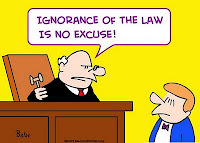
Being inattentive or unaware, doing or saying something wrong or not doing or saying what is right, does not give us the right to excuse ourselves as blameless. We may justify ourselves to say it is human to err, but ignorance is unacceptable under any judicial law. ‘Ignorance of the law does not excuse’ or ‘ignorance of the law excuses no one’ is a legal principle holding that a person who is unaware of a law may not escape liability for violating that law merely because he or she was unaware of its content.
In describing the priesthood of our Lord and the tabernacle, the author of the Epistle to the Hebrews mentioned the offering for sins of the people committed in ignorance (Hebrews 9:7). The Books of the Law—the Pentateuch—also mentioned that “if a person sins and does any of the things which the LORD has commanded not to be done, though he was unaware, still he is guilty and shall bear his punishment” (Leviticus 5:17 NAS). This may sound a little harsh and we say we are under grace, but as believers, this is a principle we should abide by and put in practice. Why should others suffer because of our words, action or lack of action? We ought not to put others through unnecessary pain because of our insensitivity and ignorance.
Let us therefore not excuse ourselves for hurting others because of ignorance. Like the woman and her friend who paid the fine despite being unaware of the law, let us find ways to make restitution for causing hurt to others (Luke 19:8-9). We should also come before God to ask for forgiveness and request His mercy, especially for those whom we have hurt and are no longer able to make restitution (Numbers 5:7-8).
Dear Lord, forgive us for the many times we unknowingly hurt others by our speech, action or inaction. Help us not to excuse ourselves from the sins and hurts we committed out of ignorance, Lord, but to find ways to make restitution for the wrong we did to others. For the ones we can no longer contact or are unaware we have hurt them, Lord, in Your mercy and grace, comfort them and heal them of their pain. Renew and sanctify us Lord that we may be more attentive to Your Holy Spirit from now on to be sensitive in whatever we say and do, and do the things we should do to provide care and encouragement.
And after the earthquake a fire; but the LORD was not in the fire: and after the fire a still small voice. (1 Kings 19:12 KJV)
 As a writer, I used to take time over the weekends to go away from the city for long nature walks to think and get inspiration from God. Early mornings are always the best times to seek solitude within nature as I calm my inner spirit to heighten my senses in listening, smelling, touching, feeling, and seeing. It is within nature that I rekindle my inner love for writing, the longing inside me that is ever growing in desire to pen down my thoughts to share to the world the greatness of our God and Creator.
Peace and quiet however is hard to come by these days, especially for those of us living in the city. Disturbances and disruptions are a norm in our daily lives. Whether we are at the gardens or parks, the beaches, at work or at other places, noise is always prevalent. We seldom can hear fully what is spoken to us amid surrounding noise.
In communication studies, barriers in communication are referred to as noise. The goal of all communication is to understand the message conveyed. Whatever disrupts the communication process is therefore regarded as noise. Noise is anything that interferes with the understanding of a communication, and it can come from external or internal. If we are conversing with someone while another person near us is talking out loud, the noise disturbance is external. If someone is speaking to us while our minds are miles away, the noise is internal.
Besides external and internal noise, there is a third noise known as semantic noise. Semantic noise is the use of signifiers or references made by the sender which cannot be understood by the receiver. If we tell a non-believer he must be born again to be saved, for example, he is unable to understand what we mean by ‘born again’ until we explain what it is clearly. Such a noise is semantic.
Like the barriers in communication, the Bible also tells of a time when Elijah the prophet was influenced by surrounding noise. While fleeing from Jezebel, Elijah was directed by the LORD to go up to the mountain to stand before Him as He was about to pass by (1 Kings 19:11). A strong wind came by, but the LORD was not in the wind. After the wind, an earthquake, but the LORD was not in the earthquake. After the earthquake, a fire, but the LORD was not in the fire. All these are just noise. Finally, the LORD spoke to Elijah in a still small voice, and Elijah heard it (1 Kings 19:11-13).
Days or hours before Elijah was able to hear the still small voice, he was not at all calm to hear God on three counts. First, he was praying that he might die (1 Kings 19:4), obviously under the influence of internal noise and lacking inner peace. Second, he was unable to find God within nature because of external noise from the wind, earthquake and fire. Third, he failed to observe how God has been taking care of him or understand God’s message beyond the semantic noise and signifiers that showed so clearly God’s presence with him (1 Kings 19:5-8).
Are we like Elijah surrounded by too much noise that we fail to recognize the presence of God? Are we calm at heart or are we easily influenced by noise? If we are constantly surrounded by disturbances or noise nearly every moment of our lives, it is important that we find peace and quiet amid all the noise. Without a heart of solitude and a calm spirit, we seldom can hear God.
Let us therefore take time to quiet ourselves before the Lord, whether at home in a quiet corner or at a place with scheduled time for no interruption or away from the crowd to a place of solitude. Let us listen carefully to the still small voice and the prompting of the Holy Spirit that we may be refreshed and renewed with heighten sensitivity to the leading of our Lord. Let us rekindle our first love for Jesus.
Calm our spirit Lord that we may enter into Your presence with longing desire in our hearts. Rekindle in us Lord our first love for You that we may once again hear You even amid all the noises of this earth. Refresh and renew us Lord so we may heighten our sensitivity to Your leading that we may also be sensitive to others when leading them to You. Thank You, dear Lord, for caring for us always. We love You and worship You with all our hearts.
FOR THE HEART OF THIS PEOPLE HAS BECOME DULL, WITH THEIR EARS THEY SCARCELY HEAR, AND THEY HAVE CLOSED THEIR EYES, OTHERWISE THEY WOULD SEE WITH THEIR EYES, HEAR WITH THEIR EARS, AND UNDERSTAND WITH THEIR HEART AND RETURN, AND I WOULD HEAL THEM (Matthew 13:15 NAS)
 Some months ago I was communicating over the phone with an administrative staff of a publisher to request help to correct a typo error made by them in one of my written articles hosted at their web site. The staff explained to me that the person handling the web site is a volunteer, so it may take some time before the error gets corrected. Understanding that, I waited, but after several weeks without any change at the site, I decided to send a follow-up e-mail. The intent was to first apologize for the inconvenience I was causing them, and then provide a step-by-step guide to help the staff easily change the typo error with the web administrator access rights she already has. The e-mail reply from the staff however turned out to be a little hostile, telling me to be patient and to understand the need for time. Obviously, the staff has misunderstood my intent and thought I was chasing her for faster support.
Many of us have experienced being misunderstood. The Bible records many instances when Jesus was misunderstood. Some of these instances include the forgiving of sins (Mark 2:5-7), the dining with tax collectors and sinners (Mark 2:13-17), the healing on Sabbath (Mark 3:4-5), the conversation with a Samaritan woman (John 4:7-9), the destroying and rebuilding of the temple in three days (John 2:19-21), and the fulfilling of the Law rather than abolishing it (Matthew 5:17).
What is the main reason for such misunderstandings? In the case of Jesus, it was because the hearts of His people have become dull. They have ears but they scarcely hear, and have closed their eyes for fear of seeing what they do not want to see or hearing what they do not want to hear (Matthew 13:15). Jesus therefore spoke to them in parables, and to those whose hearts stood steadfast with Him, they were blessed (Matthew 13:16-18).
What about us? Is the reason others are not understanding us because of their lack of sensitivity to what we are saying? Is it because they are reading between lines that they misinterpret our intent? Is it us who have misinterpreted their message or misunderstood how they think of us?
Over sensitivity and reading too deeply between the lines can give rise to misunderstandings and communication breakdowns. If we choose to hear only what we want to hear or tend to misinterpret the implied meanings or intents of other people, we need to re-examine ourselves to see if we are overly or unduly sensitive. Remember, regardless the mode we use to communicate with other people, communication can only be fruitful if the message is interpreted correctly by the receiver.
Let us be like Christ therefore when we communicate with others about Him. If their hearts have become too dull to receive direct preaching or the gospel, let us share with them 'parables' or examples derived from our life stories or anecdotes. When communicating with them, let us always be careful to clarify and verify anything that is unclear that we may not misunderstand or jump into conclusion. If there be anything that interferes with our understanding of a communication, such as presumption, assumption, prejudice, internal or external interruptions or anything else, let us take steps to eliminate them so the message may not be misconstrued or misinterpreted.
Dear Lord, help us to be attentive when communicating with other people that we may not at anytime misinterpret the meaning of the message. Lay hold of our hearts Lord that we may not be over sensitive or read into messages between the lines too deeply what are not really there or implied. Open our eyes and ears Lord that we may see clearly and hear properly the actual message along with its correct intended meaning so we may not jump into conclusion or misconstrue the truth. Forgive us Lord for misunderstanding You and others at times. Give us understanding Lord that our hearts may return to You and be healed.
Very well then, with foreign lips and strange tongues God will speak to this people, (Isaiah 28:11 NIV)
 When my wife and I visited Japan some years ago, we decided to travel around by public transport. Looking through the route signs at the subway station for direction to get to our planned destinations, we discovered none of the signs was written in English. Without a choice, therefore, we approached the station staff to ask for help instead. Conversing with the station staff however was just as difficult because they do not speak or understand the English language. After much struggle speaking to several people, my wife and I finally have a vague idea on the connecting lines we were to take in order to get to where we wanted to go.
Like the barriers we face when communicating in foreign language, the Bible in Isaiah 28 also tells of an occasion when God had to use foreign lips and strange tongues to speak to His people (v11). This was because when God spoke to them to guide them to the resting place and the place of repose, they would not listen (v12). God therefore had no choice but to use a ‘foreign language’ or a different approach to direct them by giving specific instructions. So the word of the LORD to them was, “Do this, do that, a rule for this, a rule for that,” that they may fall backward, be injured, snared and captured (v13).
Such are the ways our Lord can direct us to the right path through difficulties and failures we face in life. For whom the Lord loves, He disciplines, so as to lead us to the way we should go (Hebrews 12:5-7). Falling backward and getting injured help us learn to better understand God’s direction for our lives. If, however, we choose to harbor bitterness and become scoffers instead of learn from our failures (v14), we will not stand (v18), for we would have made a lie our refuge and entered into a covenant with death (v15). Taking refuge living out a lie or living lives with hardened hearts is making falsehood our hiding place (v15). When an overwhelming scourge—such as the problems we face in life—sweeps by, we will be beaten down, and as often as it comes, it will carry us away and sweep us through (v17-19).
Let us therefore not harden our hearts when we face difficulties in life or be conceited like the ones who hoped to build the Tower of Babel to reach the heavens that God had to confuse their language (Genesis 11:4-7). We should instead be thankful the word of God has today been translated in many languages. No longer do we need to face language barriers or struggle to understand vaguely God’s direction for us while traveling this life on earth. The Bible is God’s guidebook for us—a lamp to our feet and a light for our path (Psalm 119:105). Should we therefore not desire God’s guidance from His word and abide by His teachings to live our lives to the fullest for His purpose?
Our God is not One who expects us to follow rules blindly, otherwise He would not have given us the freedom of choice. He is a God who desires to guide us and satisfy our needs, and He will not let us be swept away under the overwhelming scourge of a sun-scorched land. He will strengthen us like a well-watered garden which spring waters never fail (Isaiah 58:11). Let us therefore not neglect to seek God’s guidance at all times and study to learn from God’s word the direction we should take in all we do or plan to do.
Thank You dear Lord for giving us the Bible as a guidebook for living our lives on earth. Forgive us Lord for the times we choose not to follow Your guidance and go our own way, that You have no choice but to discipline us in order to lead us to the right path. We know Lord that many of our difficulties in life are but ways by which You direct us to do what is right. Help us therefore Lord not to harden our hearts to take failures too bitterly, but understand that whom You love, You discipline. Keep us strong Lord and strengthen us that we may not be easily beaten down or carried away whenever a problem comes along.
But take heed; behold, I have told you everything in advance. (Mark 13:23 NAS)
 The sign states ‘WARNING! Tower of Terror is a free-fall type attraction with sudden high-speed ascents and drops through darkness,’ but I did not heed the advice and went ahead with the ride. The consequence was a once in a lifetime experience—a scare of my life—even though to some people it may be fun. That was years ago when I visited the theme park at Walt Disney World’s Hollywood Studios in Orlando, Florida.
The Tower of Terror is an attraction at the theme park, a thrill ride featuring a visit to a 199 feet tall fictional Hollywood Tower Hotel adapted from the television series ‘The Twilight Zone.’ Upon entering the elevator and going up to the 13th story, a free-fall drop sequence takes place in the dark—with all the guests in it! This drop sequence has changed over the years from one to two drops to a pre-programmed multiple drop sequence, and today randomized drops.
Like the many pre-ride warning signs around the theme parks, the Bible also provides many warning signs of what is to come before our Lord returns. Nation will rise against nation, kingdom against kingdom, and in various places there will be famines and earthquakes (Matthew 24:7). Signs will occur in the sun, moon and stars, and on the earth dismay among nations and perplexity at the roaring of the sea and the waves (Luke 21:25). In the last days, difficult times will come, for people will be lovers of self, lovers of money, boastful, arrogant, revilers, disobedient, ungrateful, unholy, unloving, irreconcilable, malicious, without self-control, brutal, haters of good, treacherous, reckless, conceited, lovers of pleasure, rather than lovers of God (2 Timothy 3:1-4). False christs and false prophets will arise and will show signs and wonders in order to lead us astray (Mark 13:22).
All these are warning signs, and God has told us everything ahead of time that we may be prepared and on our guard (Mark 13:23). We ought therefore to warn others what is to come that they may not have to face the consequence and experience the eternal scare of their lives—death without Christ. For unlike the drop sequence of the Tower of Terror ride, the drop into the bottomless pit or abyss is eternal, and all who are lost without Christ will perish and suffer the agonizing death in hell forever (Revelation 9:1-2; 20:12-15).
The Bible states very clearly that the end will come when our Lord hands over the kingdom to God the Father, after those who belong to Christ at His coming are raised (1 Corinthians 15:23-24). We should therefore take heed not to ignore the warning signs, for the gospel must first be preached to all the nations before the end will come (Matthew 24:14; Mark 13:10). As children of God, therefore, let us proclaim Christ and unravel the mystery of God’s salvation to the yet unsaved, admonish and teach those who have been saved, that we may present everyone complete in Christ (Colossians 1:26-28).
Thank You dear Lord for letting us know in advance the things that will take place before Your return, so we can be on our guard. We know Lord that difficult times are coming, with wars and famines, earthquakes and tsunamis, people who are self-centered, materialistic and without self-control. Help us Lord to take heed these warning signs, to recognize and understand the need to quicken our efforts in bringing more people into Your kingdom. Guide us Lord as we unravel the mystery of Your salvation to warn the unsaved, admonish and teach the saved, so as to present everyone complete in You.
And He stretched out His hand and touched him, saying, "I am willing; be cleansed." And immediately the leprosy left him. (Luke 5:13 NAS)
 It is no secret that people can detect our attitudes and level of interest on a subject by observing the way we carry ourselves before them. Our smiles and gestures, for example, can show our enthusiasm, while our facial and body expression can show our lack of interest.
Non-verbal communication such as body language can reveal how we think about something or feel towards someone, and sometimes even disclose what is in our hearts. This is why some people are interested in the study of body language—because it helps identify the truth from a lie. We may be able to plan the words we want to say, but we rarely can plan when we blink, smile or use other gestures during conversations. Unlike verbal communication, non-verbal communication is usually done unconsciously.
According to Positive-Way.com, up to 93 percent of communication is non-verbal, and that includes tone of voice, eye movement, posture, hand gestures, facial expressions and more. Staring or gazing at others can create pressure and tension, while maintaining eye contact can reveal whether a person is trustworthy, sincere or caring. Shifty eyes and too much blinking can suggest deception, while people whose eye movements are relaxed and comfortable, yet attentive to the other are regarded as sincere and honest. Vocal cues like tones of voice, volume, emotion, pace and the likes reveal attitudes. Bodily cues, such as hand-to-face gestures or shrugs, are strong markers of possible deception. Hand gestures or signals can communicate without the use of speech. Touch can indicate friendship or aggression, while movement toward or away from someone can convey dominance, assertion or avoidance.
The Gospels mentioned on many occasions how the Lord showed compassion and willingness to heal the sick (Matthew 20:34; Mark 6:34; 8:2). When a leper saw Jesus and fell on his face to implore Him, saying, “Lord, if You are willing, You can make me clean," Jesus stretched out His hand and touched him, saying, “I am willing; be cleansed” (Luke 5:12-13).
This incident reveals something about body language. Although it is not explicitly stated in the Bible any eye contact between Jesus and the leper, it is clear that Jesus must have shown compassion because He willingly stretched out His hand and touched him. The touch of Jesus is of friendship, not dominance, assertion or avoidance. Our Lord’s non-verbal cues—the tone of His voice, the volume, emotion and pace—must have revealed love and compassion and put the leper at ease, without pressure or tension. Similarly, when the leper saw Jesus and fell on his face to implore the Lord, his posture, eye contact, vocal and bodily cues, gesture and facial expression must have revealed his heart.
When we come before the Lord, do we come to Him with a broken and contrite heart or do we carry untruth and insincerity in our hearts (Psalm 34:18; 51:17)? God does not need to see our body language to know our hearts (Psalm 44:21; Jeremiah 17:10), but are we, like Jesus, filled with compassion for others? Are we willing to stretch out our hands to touch those who are in need? Are we showing nonchalance toward people around us?
In whatever we do, therefore, let us do it with sincerity of heart, knowing that from the Lord we will receive our reward (Colossians 3:23-24). Let us not do anything from selfishness or empty conceit, but with humility of mind regard one another as more important than ourselves; not merely looking out for our own interests, but also for the interest of others (Philippians 2:3-4). Unless we do all things from a sincere heart, our body language can give us away and disclose to the world how much we really care.
Dear Lord, forgive us for sometimes doing things without sincerity of heart. We know Lord our hearts can never be hidden from You, and even if we attempt to hide our feelings from others, our body language can reveal much to dishonor Your name. Help us dear Lord to always stay truthful and sincere at heart when doing the things we do, especially while caring for others. Mold us Lord to be more like You that we may with a heart of compassion reach out to others without giving them tension or pressure.
But everyone must be quick to hear, slow to speak and slow to anger; (James 1:19b NAS)
 "Technical support, how can I help you?"
"Well, I have a problem using your software," said Mr. Brown in a not so friendly tone. "Every time I access one of my application databases, it would just crash on me."
"Can you tell me what you saw on the screen when that happened? Was there any error message?"
"I don't know!" Mr. Brown exclaimed, sounding angrier than before. "Do you expect me to write down the message with the error codes? I can't even capture the screen because it had already crashed!"
That was the kind of telephone conversations I get frequently while I was still working as a helpdesk technical support staff for a software corporation some years ago. Helpdesk support was not something fun, and I was often stressed. In fact, for a period of time I was near suffering from telephonophobia—the fear of telephones or reluctance to make or take phone calls.
In my case, it was not so serious to the point of failing to respond appropriately in a telephone conversation, but every time when the phone rang, I would get a chill down my spine. Inside of me was an immediate sense of withdrawal, seeking desperately to avoid receiving another telephone call. Sadly, however, that was part and parcel of my job. In effect, it was not actually the job that bothered me. It was the people I spoke to that caused such distress—people who simply refuse to make any effort to understand how things work and prefer to speak harshly. These days, I only make and receive phone calls when necessary, maybe because I am more comfortable texting than speaking on the phone or maybe it is just my tendency as a writer.
As a tool for communication, the telephone is undoubtedly very useful. How we use such a tool, however, is what really matter. In a helpdesk environment, a telephone answering service can be used to delay customers from getting to a ‘real’ person until he or she has selected multiple number options from the keypad. Such an approach although is effective in filtering who can get support, it can also frustrate the customer because of the time wasted on waiting and the possibility of a dropped line or redirection to a recording. At times, we may also receive calls that we feel is a waste of time, such as telesales and telemarketing calls.
As servants of the Lord, therefore, let us not spend too much time on unfruitful telephone conversations. Instead, let us use this tool for the Lord. Whenever needed, let us not hesitate to pick up the phone to make a call to care for another or take a call to talk to the person who is in need. We can pray and minister to the person over the phone and speak words of care and encouragement or provide spiritual counsel. When on the telephone, let us be good listeners to hear the needs of others and ponder carefully how we should speak to console, give advice or address the need of the other (James 1:19). Rather than be like the customer who is too quick to anger, let us hear carefully what is spoken and clarify if necessary, lest we drift away from our intended purpose and cause a souring of relationship instead.
Just as we make calls to speak to our loved ones when they are away or if they are staying afar, let us do the same for our fellow brothers and sisters in Christ who need encouragement. Let us not neglect to take time to call our friends to catch up and show our care that they may through us desire to draw closer to the Lord and know more of Him.
Dear Lord, thank You for the telephone that enables us to verbally speak and express ourselves to another, even far remote. Help us Lord not to hesitate to use such a tool when the time calls for us to make or take a call in caring and ministering to another. Enable us Lord to be quick to hear, slow to speak and slow to anger. Remind us always Lord, not to waste too much time on unfruitful conversations or drift away from our intended purpose to risk causing the souring of relationships due to careless or thoughtless speech.
And do not be conformed to this world, but be transformed by the renewing of your mind, so that you may prove what the will of God is, that which is good and acceptable and perfect. (Romans 12:2 NAS)
 Media influence and its effects have long been a topic of extensive discussion. While it may be true that much of the information we know today could not have been communicated without the media, many people believe the media can still have negative influence in shaping how we think about certain matters.
According to cultural and media studies expert Colin Mercer, the way people in a society live their lives are shaped by how we as media audiences subject ourselves to governance and meanings constructed within discourses, created through the occasions of reading media texts.1 This means when we discuss about what we see, hear or read from the media through spoken, print, graphic or electronic communications, we are in effect exposing ourselves to media influence.
Media texts from advertisements, for example, give advertisers the ability to target consumers through text, image, video, animations and other forms of media representations. By repeated showings of such texts, consumers can grow to accept propagandas of what is portrayed as good, acceptable or better than others.
Discourse on crime is another example. Statements such as 'punishment', 'theft' or 'penalty' produce the knowledge of criminals as subjects of deviancy, and we as citizens may see ourselves as different from them because we behave 'normally'. Being 'normal' however is a constructed regime of truth that has been naturalized into habituation and assimilated into social norms. Such differentiations although may seem to be a good way of knowing what is right or wrong, it can also construct what is unacceptable in certain cultures to become acceptable in another.
If a government chooses to regulate the brothels, casinos, clubs and other unhealthy forms of entertainment as legally acceptable, do they automatically become right? If we gamble and drink, is it right or wrong? At which point of addiction are we considered wrong? Is it only when we become violent as a result of these addictions that we are deemed as deviant? Who defines the standard anyway, and who benefits most from such set of rules? Is it the rulers or the citizens? Is it the saints or the sinners?
In the Law of Moses there are many rules, and some of these rules are considered unacceptable today or even quite impossible to adhere, given the freedom we have. Freedom however is a choice, and it can be a bad choice or a good choice. The fact remains unchanged that what may be considered good or bad is relative and subjective, differing in the eyes of men and in the eyes of God.
As believers, we know we have been saved by God’s grace. Does that then mean we should continue in sin that grace may increase (Romans 6:1-2)? Certainly not! Rather, we ought not to be conformed to this world, but be transformed by the renewing of our minds that we may prove what the will of God is, which is good, acceptable and perfect (Romans 12:2).
When we read, hear or view media texts, therefore, let us diligently decipher what is being represented, rather than accept it without consideration. We should not be influenced by the media, but should measure what is good or bad according to the standard of God, not men. Only when we are guided by the Holy Spirit and the word of God can we know what is truly right or wrong (Psalm 1:1-2; Proverbs 29:18).
Dear Lord, help us not to be easily taken in to believe whatever is constructed by the media is the truth. Do not let us be influenced by what we see or read to normalize what is unholy as acceptable social norms. Open our eyes Lord that we may not unwittingly classify people by the way we have been taught through the media to differentiate ourselves from them and leave them to die without You as their Lord and Savior. Keep our minds clear Lord and guide us by Your word and Spirit to know what is right and what is not. Renew our minds and transform us that we may prove what Your will is, which is good, acceptable and perfect.
1 Mercer, C. (1992), 'Regular Imaginings: The Newspaper and the Nation’ in Celebrating the Nation: A Critical Study of Australia's Bicentenary, Bennett, T. et al (eds), Sydney: Allen & Unwin.
 The four seasons are often thought of by many as distinct phases in a year. Spring is a time for new life or rebirth, summer for warmth and growth, fall for harvest and gathering, and winter for sleep, rest and death. According to an article at IndepthInfo.com, the variance in temperature and climate on the earth during the different seasons is largely because of the tilt of the earth. As the earth circles the sun, the axis tilts more toward or away from the sun. This tilt consistently points in the same direction regardless where the earth is positioned in the orbit and determines the warming and cooling in a seasonal cycle.


