And He said, "See to it that you are not misled; for many will come in My name, saying, 'I am He,' and, 'The time is near.' Do not go after them. (Luke 21:8 NAS)
 Photography news reporting can be interesting when it is placed in context with a written story. However, it can also be dangerous if taken out of context.
One of the myths about journalistic photography is the perception of seeing is believing. As media audiences, we tend to assume what we see in a photograph is equivalent to seeing the actual event, hence genuine in every respect and capable of conveying the truth about what had happened.
Photography, however, in reality only records what had been captured and does not interpret the meaning of the picture. A photograph is not reality seen and therefore cannot be true evidence. With digital editing capabilities today, creative intervention can also tamper with the authenticity of what was actually 'seen' through the eye of the camera.
When we read a piece of news, we need always to remember that photography and messages conveyed in a written story can only be perceived reality. This can be manipulated to send a particular message to us, and unless media representation is deconstructed and understood as simply representations, our minds can be deceived or be misled into believing what may not be true.
Jesus said, “See to it that you are not misled; for many will come in My name, saying ‘I am He,’ and, ‘The time is near’ (Luke 21:8a NAS). All of us who have eyes to see will probably think we cannot be easily misled or deceived into believing one who claims to be Christ, even if he is able to perform miracles. However, when it comes to looking into what’s going on in our own lives, we tend to be completely blinded and not see the Lord’s hands guiding us in the circumstances we face. More often than not, we see our lives crumbling down and falling apart, and sometimes even crippling when the going gets tough. We may have eyes, but we do not see or understand the reason behind what is going on or what has gone wrong in our lives.
It is perfectly understandable to feel perplexed during times when sorrows befall us, but if this sadness and gloom continue into days, weeks, months or years, then we must relook and reflect to know the reason why. Like the one who sees ‘reality’ through the eye of a camera, we may not be able to see the reason behind the difficult times now. This is because what we see is only what had been captured, without the understanding of the full story behind.
Like Joseph of the Old Testament who sees every event in his life as part of God’s plan (Genesis 45:5), we ought also to relook and reflect on our past to see and understand. Rather than blame God or anyone else for whatever unhappy things that happened in our lives, let us see the truth for itself. Let us not to be misled to think the worst of things or live our lives under a lie.
Things that happened in my past and present, to me, are simply God’s way of molding me for His purpose. When I reflect, I see how at each stage of my life God was always there for me. I am therefore thankful and forever grateful to God my Savior. Like me, do we see God’s hands in our lives? If we do, then let us not dwell in sorrow any longer. Let us come forth with joy because God knows His plans for us—plans for our well being and not for calamity, to give us a future and a hope (Jeremiah 29:11).
Thank You, dear Lord, for always taking care of us and for seeing us through every step of the way. We know Lord whatever is happening and had happened in our lives are part of Your plan for us in molding us to be who we are today for Your purpose. Help us Lord to reflect and see how at each stage of our lives, You have been there for us. Remove from us Lord all the gloom and sadness, that we may with grateful hearts come before You in gladness of joy and thanksgiving.
O taste and see that the LORD is good; How blessed is the man who takes refuge in Him! (Psalm 34:8 NAS)
 Many of us have been taught that the human tongue may be divided into various sections when mapped according to areas of taste receptors. The tip of the tongue is the section for tasting sweet, the sides for sour and salty, and the back for bitter. Some studies however suggest that this mapping may be wrong because there is at the least a fifth basic taste.
In a health news archive from The New York Times, it was reported that besides the four basic tastes of sweet, sour, salty and bitter, there is a fifth flavor—savory. Scientists suspect there are receptors for other flavors as well and that receptors for basic tastes are not localized according to sections but spread throughout the tongue. What this means essentially is that receptors for different tastes are not confined to certain parts of the tongue. According to OneLook Dictionary, 'savory' means something “pleasing to the sense of taste” or “morally respectable or inoffensive,” and ‘savor’ refers to “flavor, taste of something” or as “derive or receive pleasure from; get enjoyment from; take pleasure in.” Cambridge Dictionary defines ‘savor’ as “to enjoy food or an experience slowly, in order to enjoy it as much as possible.”
We know what it is like to taste and savor the food of our delight, and we know what it is to desire food that whets our appetite. Not everyone however gets to experience such luxury, especially the ones who are in want or poverty. Depending on our ability and circumstances, each of us can derive satisfaction and pleasure from tasting different flavors. Some of us however may get to taste or experience less of the sweet and more of the sour, salty or bitter. More often than not, many of us experience multiple ‘flavors’ of different situations at the same time, and these are seldom confined only to an area in our lives. We may taste and enjoy an aspect of our lives, yet be suffering at the same time in other areas. Like the different flavors we taste using our tongues, our lives often face differing experiences at different time.
The Bible says, “O taste and see that the LORD is good; How blessed is the man who takes refuge in Him” (Psalm 34:8 NAS)! This is a psalm written by King David while he was pretending to be insane before Abimelech. David was able to praise and glorify the LORD despite his circumstances (Psalm 34:1-4). He was able to do so only because of his complete trust in God, having tasted God's goodness (Psalm 34:8).
As believers of the Lord, we should be like David to have complete trust in God. Regardless our situations, we can count on God to bless us when we take refuge in Him (Psalm 34:8). Whether we are presently experiencing the sweetness of a good life or facing the bitterness, sourness or saltiness amidst a multitude of difficulties, let us stand firm and remain calm in spirit to praise and glorify God. Like the way we savor and taste good food, let us also savor and taste God’s goodness slowly, to enjoy it as much as possible by dwelling our minds on things honorable, right, pure, lovely, of good repute, excellence and worthy of praise (Philippians 4:8). Beyond that, let us also derive and receive pleasure in honoring Christ our King, for this is respectable and inoffensive, pleasing to the sense of taste wherein we find fulfillment and complete satisfaction in our Lord. How blessed are we who take refuge in Him!
Thank You, dear Lord, for always being there for us in good times and in bad times. We are truly grateful to You for allowing us to taste of Your goodness in our lives and for taking care of us when we choose to take refuge in You. Whether in time of sweetness or in times of bitterness, sourness or saltiness, we will praise and glorify You. Dwell our minds Lord on all the good things You have done for us, and help us not forget to trust You even in the worst of situations. Draw us close to You Lord as we take pleasure in pleasing You our Lord and King.
So faith comes from hearing, and hearing by the word of Christ. (Romans 10:17 NAS)
 We have heard the saying ‘No news is good news’, and we know in certain circumstances, this may not be true. Such a saying is usually true only in times of crisis where no reported news of injury or death is good news or when sales are closed without any complaint throughout the warranty period. In the context of spreading the gospel, however, without the good news, the death toll can only increase and that’s bad news!
The Bible states clearly that the good news of salvation in Christ must be proclaimed in the whole world before the Lord returns (Matthew 24:14). But how can the unsaved call on Christ in whom they have not believed? How will they believe in Him whom they have not heard? How will they hear without a preacher (Romans 10:14)?
We know faith comes from hearing, and hearing by the word of Christ (Romans 10:17). If we, however, prove ourselves to be hearers but not doers (James 1:22-25), then in vain we have been called to be God’s witnesses (Acts 1:8). Let us hear this, therefore, if we have been foolish and senseless to have eyes but do not see, and ears but do not hear (Jeremiah 5:21). Give ear and listen to the voice of God! Hear His words carefully, whoever has ears (Isaiah 28:23; Mark 4:9)! The Lord is not slow about His promise, as some count slowness, but is patient toward us. He does not wish for anyone to perish but for all to come to repentance (2 Peter 3:9). Let us therefore take care what we listen to, for by our standard of measure, it shall be measured to us, and more will be given besides (Mark 4:23-24).
Wail, everyone! The day of the Lord is near and will come as destruction from the Almighty to all who are unsaved (Joel 1:15; Isaiah 13:6). Listen to what the Lord is saying, and do not hesitate to proclaim to the world the good news (Matthew 28:18-20)! The Lord has given us His Spirit to dwell within us. He has anointed us to bring good news to the afflicted, to bind up the brokenhearted, to proclaim liberty to captives and freedom to prisoners, and to comfort all who mourn (Isaiah 61:1-2). Let us hear and obey, for there is no other Way by which men can be saved apart from Christ (John 14:6).
How then shall we reach the world for Christ? There are so many ways—through missions, personal evangelism, meeting the needs of others, living out Christ in our lives, sharing the reality of the risen Christ and more. In whatever way we choose to reach out to others for the Lord, what’s most important is to get through the message of the good news accurately to the pre-believers (2 Timothy 2:15). For the word of God, in which the good news is heard, is living and active, sharper than any two-edged sword, piercing as far as the division of soul and spirit, and able to judge the thoughts and intentions of the heart (Hebrews 4: 12). Let us therefore be sensitive to the prompting of the Spirit in us, and let Him guide our hearts as to the best ways to reach out to the unsaved. Let us remember always that unless the word of Christ is preached, the good news cannot be heard, and faith cannot take place, which end for the unsaved can only be bad news!
Dear Lord, forgive us for being negligent in sharing your good news to those who are yet unsaved. We know Lord that unless they hear Your good news, faith cannot find its way into their hearts, and the end can only be bad news. Help us therefore Lord to desire to reach out and touch lives in ways beyond the conventional, to go the extra mile in meeting the needs of others, and to reveal more of Christ in our lives. Thank You dear Lord for the empowerment of Your Holy Spirit in us to bring good news and comfort to the afflicted, bind up the brokenhearted, and set the captives free.
And Jesus kept increasing in wisdom and stature, and in favor with God and men. (Luke 2:52 NAS)
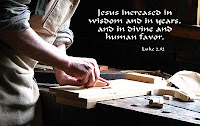 Juggling between pleasing God and men is no easy task, and in some situations we may have to choose one or the other.
Ever since the prophet Samuel anointed David to be the next king of Israel, David has been watched and observed by man, not for his physical appearance, but for his actions and reactions. It is clear that David was selected not for his physical strength or stature, but for his heart towards God (1 Samuel 16:5-13).
In many occasions, Saul sought to kill David, but each time David spared the life of Saul instead, refusing to kill God's anointed (1 Samuel 24, 26). His covenant with Jonathan concerning the preservation of Saul's family line was closely observed without fail (1 Samuel 18, 20). David consulted God each time before he goes to battle (1 Samuel 23:2; 2 Samuel 2:1, 5:19, 23) and he treated his henchmen fairly (1 Samuel 30). He dealt fairly with the people who accommodated him and his men while running from Saul (1 Samuel 25).
When the servant of David, Joab, killed the commander of Ish-bosheth's army, Abner, David made it clear to all Israel that it was never his intent to kill Abner who had made a prior covenant with David (2 Samuel 3:13-39), and through action, David mourned and made restitution by fasting. The people observed David and "all Israel understood that day that it had not been the will of the king to put Abner the son of Ner to death" (2 Samuel 3:37 NAS).
Now all the people took note of it, and it pleased them, just as everything the king did pleased all the people. (2 Samuel 3:36 NAS)
It is clear that David was a man of integrity, pleasing in the eyes of God and men. To the men, David's action, mannerism, behavior and fair dealings won him the respect of the people who observed him (2 Samuel 3:36). To God, the LORD said to Samuel concerning David's brother, Eliab when he was looking at the sons of Jesse to anoint the next king:
"Do not look at his appearance or at the height of his stature, because I have rejected him; for God sees not as man sees, for man looks at the outward appearance, but the LORD looks at the heart." (1 Samuel 16:7 NAS)
David was therefore chosen to be king because of his heart towards God, not for his physical strength or ability, but because he was pleasing in the eyes of God.
Like David, Jesus, as the Son of God, went through the same lessons while He was a lad. He grew in wisdom and stature, and in favor with God and men (Luke 2:52). No doubt, there were occasions when Jesus had to choose between God and men, to please the Pharisees and other people or to please God His Father. In situations such as these, Jesus chose to please God the Father, who for this reason said, "This is My beloved Son, in whom I am well-pleased" and "This is My Son, My Chosen One; listen to Him" (Matthew 3:17; Luke 9:35 NAS).
Two things we can learn from the life of Jesus and David. First, our actions speak louder than words. Second, our actions must come from the heart. As believers in the Lord, it is important for our hearts to be constantly in tune with God to follow His commands in every of our action. There is nothing wrong with being pleasing in the eyes of God and men, because it is by our actions and behavior that men will see God in us, so they may believe and give glory to God.
Dear God, thank You for giving us Your Son to set for us an example of what it means to increase in favor with God and men. Thank you also for the example of King David, who You have chosen because of his heart towards You. Help us dear Lord to live our lives pleasing in the sight of God and men, that by the way we live, the world may see You in us. Stir our hearts Lord that we may always consciously choose to please You first rather than men. We praise and worship You Lord for You alone are worthy to sit on the throne of our lives and our hearts.
I know how to get along with humble means, and I also know how to live in prosperity; in any and every circumstance I have learned the secret of being filled and going hungry, both of having abundance and suffering need. (Philippians 4:12 NAS)

I used to work as a helpdesk support engineer for a large software corporation that paid me a tidy sum each month. The remuneration per month was enough to support my family, spend on personal and family indulgence, and still be able to save some money.
A day came, however, when the corporation announced it would be moving its helpdesk operation to another country, so I began to look for another job and by God's grace found one that paid even higher, but with added responsibilities as a project manager. After a year into the job, I had to quit because I was totally stressed out working under a 24/7 environment.
While still serving notice for my resignation, I fell ill and underwent a surgery for appendicitis. During the three weeks of leave, my perspective of life changed completely as I spend more time with the Lord. I realized then how weak and frail human life could be and learned dependency, that is, dependency on God to live on, and dependency on others to take care of me. That period of solitude was God's way of preparing me to face something bigger.
I soon started work at another company as a technical consultant. After six months, however, I was informed that my service was no longer required because there was not enough business in the regional countries I was serving in. That was the beginning of difficult times ahead for me and my family.
During that year, the technology industry slumbered and did not bounce back until some five years later. Staff hiring as a result froze. I worked hard to look for alternative jobs but found none during the five years of waiting, so I took up freelance work as a technical consultant and writer. These occasional work assignments however did not provide sufficiently to sustain my small family, so I had to dig into my savings. Amidst all of these, I was also pursuing my part-time degree course, which fee also took up a substantial amount of my savings.
Throughout the years of waiting, I sought the Lord for sustenance, and God never failed to provide sufficiently. Every time when there were some expenses or a necessity I had to pay, the Lord would grant me a work assignment that sufficiently covered for that time of need. Nearing the end of my savings, I looked to the Lord and sought Him earnestly, knowing in my heart that God will never fail to provide for me and my family.
I asked of the Lord specifically to grant me a job that would be according to His will, using the talent He has given me in writing, yet without wasting my years of work experience in the technology industry. Within the next month after I requested of the Lord, He answered my prayer and gave me a job as a technical writer in the technology industry, fulfilling my desire to write, yet without sacrificing my past experience.
Today, although I no longer can afford to spend on personal or family indulgence because I am now receiving only half as much as I used to receive as a project manager, my family and I are living each day happily and sufficiently by the grace of God.
Like me, some of us may now be experiencing a change in our financial status. Each of us however need not fear for our future as to what we shall eat or drink or wear (Matthew 6:25-33). Just as the Lord has taken care of me and my family, He will also take care of us who seek Him and ask for His providence. Let us therefore learn to live within our means in any and every circumstance that we may understand the secret of being filled as well as living in sufficiency and contentment (Philippians 4:12; 1 Timothy 6:7-8).
Thank You, dear Lord, for always being there for us. You alone O Lord is our sufficiency. You have the power to perform awesome acts and we will eagerly utter Your abundant goodness to the world and shout joyfully of Your righteousness. You are gracious and merciful Lord, slow to anger and great in lovingkindness. You are always good to all who trust in You and Your mercies are over all Your works. Blessed be Your name Lord forever and ever. Amen.
But whatever things were gain to me, those things I have counted as loss for the sake of Christ. More than that, I count all things to be loss in view of the surpassing value of knowing Christ Jesus my Lord, for whom I have suffered the loss of all things, and count them but rubbish so that I may gain Christ, (Philippians 3:7-8 NAS)
 I served as a librarian when I was in high school. During that time, much of the library's administration and cataloging were done using the typewriter, so I was sent to the YMCA to acquire typewriting skills.
While at the YMCA, I came across a brochure about a free Christian correspondence course, so I enrolled and got to know about Christianity. As my interest grew, I continued with other Christian correspondence courses from other organizations. Before long, faith found its way into my heart to desire to receive Christ. Salvation did not take place immediately, however, because I had no idea how it would be like to say the sinner’s prayer, having no direct contact with any Christian thus far.
One day, while at the public library near my high school, a stranger who was a student from another school approached me and invited me to attend a church-organized student meeting near the library’s vicinity. An evangelistic meeting was being held during my first visit, and having learned about Jesus through the correspondence courses, I was ready and received Jesus as my Lord immediately.
Becoming a Christian was, however, not all smooth sailing. Coming from a Taoist family, I was persecuted and regarded by my parents as one who had gone astray and not known my own roots, and by the people of the community a renegade and an outcast. In school, I was ridiculed and nicknamed 'holy cow,' and was segregated from a circle of friends. It was not until several years had passed that the people I knew gradually accepted me for who I am. Even till this day I face rejections and displeasure at times from members of my family and relatives, especially during occasions like non-Christian funerals because of my refusal to participate in the rites.
All these sufferings are insignificant in comparison to the sufferings the Lord went through for me. Whatever things were gain to me in the past, therefore, I willingly count them all lost for the sake of Christ because of the surpassing value of knowing Him as my Lord and Savior (Philippians 3:7-8). What a joy to trust in Jesus! When things seem humanly hopeless and even at times when I stray, God never once turned me away. He is always present and near to fill my heart with a calm that empowers me to continue on with confidence.
Now, after more than 30 years in the faith, I had been privileged to serve the Lord in many areas, including church youth ministry and cell group leadership, worship leading, gospel events counseling and new converts nurturing. I had also been privileged to study in two different theological seminaries part-time and write Christian articles for church newsletters and Christian magazines.
Today, I am serving the Lord and ministering to His people through devotional writing at various online Christian communities. My heart’s desire is to share with everyone the inner peace I have in Jesus.
Like me, many of us who had received Jesus as Lord have our own stories to tell. A good practice is therefore for us to be always ready to share what the Lord had done in our lives. When we share, let us always do so with gentleness and respect that whoever hears our testimonies and sees our behavior might come to know Christ (1 Peter 3:15-16).
Thank you dear Lord for always being near and present for us. Without You, we would not be who we are today. Only in You Lord can we remain calm even in the midst of storm, and only in You Lord can we trust to continue life with full confidence. Even in suffering for the faith, Lord, we shall not despair because of the surpassing value of knowing You. Blessed be Your name Lord, now and forever! Amen.
About the Author
so that your giving will be in secret; and your Father who sees what is done in secret will reward you. (Matthew 6:4 NAS)
 As a freelance writer, my livelihood depends on being paid to write. Getting paid for work done, however, does not usually come until after the article is published, and this can mean several months of waiting. Editors of most publications expect all content for publishing to be ready months ahead so as to provide time for editing, layout and artwork. Given such a scenario and the irregularity of freelance writing assignments, it is therefore unwise I should rely solely on getting paid for my written works to keep me and my family alive. The next best thing for me to do is of course to look for other more regular writing related work, such as corporate writing or ghostwriting.
Ghostwriting, as the name implies, is about writing a piece of work on behalf of someone else. The writer is the ghost and the person who hires the writer is the owner and author credited for the written work. Much of the information and ideas for the written content usually comes from the hirer, and the ghostwriter’s responsibility is to write and collate all the information gathered and make sense out of it into a written format, readable to the targeted audience.
Ghostwriting is a service frequently in demand, and although it is one of the less glorifying jobs a writer can do for a living, its monetary compensation is often quite good. As a ghostwriter, however, one does not get the satisfaction of seeing one’s own name in print. What is seen instead is someone else claiming authorship to the written work. This can sometimes be challenging and even painful for the ghostwriter who puts in enormous amount of effort, only to disclaim association with it at the end.
Like ghostwriting, many of us may serve the Lord in our own quiet ways, in church, ministries or other Christian activities. Some of us may serve in the ministry of helps (1 Corinthians 12:28), such as administration, flower arrangement to beautify church environment, navigating the onscreen slide show for display of song lyrics during church service or other considerable insignificant tasks. Such responsibilities may seem mundane and unimportant to some, yet without them, many of us may find it less conducive to worship God.
I myself used to serve in a small church as a helper administering the sound system. Every week, I would arrive early to the rented place where the church service was to be held, and set up the public address system for use by the speaker, worship leader, musicians and choir members. After the service, I would stay behind to keep the equipment and transport it down from the highest floor of the building to the church office at ground floor. Few people knew this was being done by me week after week for several years, yet it was something that had to be done in order for the service to run smoothly.
Our efforts for the things we do may sometimes never get acknowledged, and this can be trying and even painful at times. We can be assured however that whatever we do for the Lord in secret is not unknown to Him (Matthew 6:4). Every single thing we do—big or small—is significant in the sight of God because He knows and sees our hearts (Jeremiah 17:10). He will give to each of us our just rewards according to our deeds (Hebrews 6:10; Matthew 6:4; Jeremiah 17:10).
In whatever we do, therefore, let us not seek merely to be noticed by men (Matthew 6:1-2). Instead, let us when we give, do so in secret, for what we do in secret, God sees and will reward us accordingly. Remember, nothing is hidden that will not become evident, nor anything secret that will not be known and come to light (Mark 4:22; Luke 8:17).
Help us dear Lord not to seek the recognition of men or despise the small things we can do in serving You and Your people. Create in our hearts Lord the true desire to want to do all things for Your glory alone. We know O God that even in secret our efforts are never wasted, because You see and know our hearts and will reward us according to our deeds. Blessed be Your name Lord and glory to You forever and ever.
Now therefore if it seem good to the king, let him search in the king's library, which is in Babylon, whether it hath been decreed by Cyrus the king, that the house of God in Jerusalem should be built, and let the king send his pleasure to us concerning this matter. (Ezra 5:17 DRB)
 I used to frequently visit the main public library near where I studied in my high school years. Although it had since been demolished, the library still holds a very special place in my heart. It was there a stranger invited me to a church-organized youth club near the library’s vicinity that I received Jesus as my Lord and Savior in the first meeting I attended. It was also there I first found my love for writing while serving as a committee member in a writing club organized by the library to promote local literature.
Just months before the library was pulled down a few years ago, a call was made to the public for people who have fond memories of the library to submit their reminiscences in the form of short write-ups, photography and drawings. These submissions were shortlisted by a press editor, proofread and edited before they were sent for publishing into a coffee table book entitled, Moments in Time: Memories of the National Library.
I was privileged and honored to be among the many writers who have their articles published as part of the recorded history of the library. This book boasts of content containing works from more than a hundred individuals with writings of many diverse stories, including love story, reminiscence and humor. Contributors of the write-ups and photographs in the book were made up of people from different walks of life, including library staff, past library users, educators, students among many others.
Like the book that recorded the history of the library, the Bible also records many events of the past and stories of individuals who have excelled or failed in their walk with God. The Bible is made up of 66 books written by some 40 authors covering a period of approximately 1600 years. It includes many diverse stories of recorded history, teachings, prophesies and a love story that is central to the theme of the entire Bible. This love story relates God’s immense love for the world that He gave His one and only Son to die on the cross, that whoever believes in Him shall not perish but have eternal life (John 3:16). Authors of the Bible come from different walks of life and include kings and princes, poets and philosophers, prophets, statesmen, and even fishermen.
All the books of the Old and New Testament are now complete in a single book—the Holy Bible. Few would have come to know the Lord if not for the Bible, for there would not have been the recorded history of what God had done for us and for the people before us (Exodus 13:8-9). Even in the days of the Old Testament, things would have been very different for Israel and the house of God if not for the recorded history found in the library archives of the king (Ezra 5:17; 6:1-5).
We are a privileged people to have God’s word in a book. Although we cannot add anything to it nor take words away from it (Revelation 22:18-19), we can be a part of its history in the making. Written in the Bible are many prophesies, with us still within the church age before our Lord's return. Till then, history as we know it in this life has yet to come to an end, and the new chapter will begin only in the new order where tears and mourning, pain and death will be no more (Revelation 21).
Let us therefore not be afraid or hesitate to do our part in making history within God’s word. If we do well, we shall be with Him when He returns (1 Thessalonians 4:16-17). In the meantime, let us not forget all His benefits, for He has redeemed our lives from the pit and crowned us with love and compassion (Psalm 103:2, 4).
Thank You dear Lord for preserving the historical records of Your word that we are able till this day know the plans You have for us. Help us always to remember Your kindness Lord, that we may not be complacent, but be forever grateful for Your immense love to willingly die on the cross to save us.
Or does not the potter have a right over the clay, to make from the same lump one vessel for honorable use and another for common use? (Romans 9:21 NAS)
 One of the greatest nightmares I face as a writer is to have my written work modified beyond recognition by the editor. All through my years as a writer and journalist for many publications, my written works have seldom been edited more than a tenth of the content, and I respect the editors for that. However, on one occasion, I had a bad experience working with an editor I have never worked with before.
I was assigned by the editor to write a technology article for a trade magazine on wireless solutions. As part of the assignment, I was required to work with several corporations to find out how these solutions have helped their businesses, and to obtain quotes from them and from people of the industry. After spending many hours of hard work and conducting interviews, I painstakingly wrote the article and compiled quotes from many key people in the business world, trade associations and government bodies. I re-read my written work over and over again to self edit before I finally submitted the article to the editor. Sadly, however, the editor decided in the end that all the quotes would be lifted off to focus on an out-of-date story about wireless technologies instead! The irony of it all was the editor admitted technology was not her area of competency.
By the time the article was published, I was no longer able to recognize its content as having been written by me, except for some minor semblance. Although my name was tagged as the author of the article, I refused to acknowledge in public the article was my work. This was because I felt shamed by it and was worried the article would damage my reputation as a credible technology writer. That was the last time I worked with that editor.
Many of us have experienced circumstances similar to mine. In a corporate environment especially, many bosses take claim of the work we have done without acknowledging our contribution or participation in doing the task. We may have put in lots of effort working on the task, but sometimes we see our hard work being dumped or changed completely by our supervisors. At the end of it all, when the task gets blundered as a result of the changes, we are often blamed for it because we were the ones who started it.
Unlike the circumstances we face with editors, bosses or supervisors, we can be assured that when it comes to God 'editing' or changing our lives, it is always for our benefit that God is doing so (2 Corinthians 4:15). Our efforts put in to serve God and His people will never be wasted (Matthew 25:34-40), for our God is not One who is unfamiliar with what He is doing (1 Corinthians 3:18-20). He is the Alpha and Omega, and He knows what is before and what is after (Revelation 1:8; 22:13). He is not a man that He would unjustly take credit for what He has molded us to become, nor put the blame on us when things blunder up (Philippians 1:20). He would not force a change in us to the point of going against our free will.
It is for God’s purpose we have been made (Psalm 100:2-3), so rather than resist the ‘editing’ or molding of God in our lives (Isaiah 64:8; Jeremiah 18:3-4; Romans 9:20-21), let us gladly welcome Him to mold us that we may reveal more of Him and less of ourselves (John 3:30). Let us be His vessels for honor, sanctified, useful to the Master, prepared for every good work (2 Timothy 2:21). Let us not be ashamed to be identified with Him and the gospel, for in Christ and in His word is the power of God for salvation to everyone who believes (Romans 1:16).
So if we encounter a difficult editor, boss or supervisor the next time round, let us not fret but agree to disagree in tolerating each other's opinions without arguing (Philippians 2:14-15). Let us give all respect even when the other is unreasonable, for this finds favor if for the sake of conscience toward God we bear up under sorrows when suffering unjustly (1 Peter 2:18-19).
You O Lord are the Potter and we are the clay. Mold us therefore dear Lord to be useful vessels for You. Help us not to resist Your molding, but to willingly let You change us to become the people You want us to be. Move our hearts Lord that we may not be ashamed to be identified with You and to proclaim Your gospel.
And He said to them, "Come away by yourselves to a secluded place and rest a while." (Mark 6:31a NAS)
 We usually think clearer and more creatively when we are relaxed. Unfortunately, many of us think at the worst of times. As a writer, I often muse and think over the subject matter before I write, and I write best when I am relaxed. I get inspired easily when walking through the woods or while taking long nature walks. Such luxury however is seldom possible, especially when I am on an assignment with a short deadline. In circumstances like this, the next best thing for me to do is to research and compile, then write. This is how I tackle writer’s block.
Research and compilation is common in most environments and if we know the process of problem solving, we know what this means. Problem solving is about identifying, analyzing, implementing, and evaluating. First, research and gather as much information on the subject as possible. Next, sort out the usable from the unusable, and then select what goes into the story. Finally write the story in our own words from the information gathered, re-reading it to edit till it reads smoothly.
A story written through research and hard work without inspiration however is seldom satisfactory to the writer, although it gets the job done. The fact remains however that an article can be better written at a different time with clarity of mind shows the importance and effectiveness of writing with sufficient rest.
Christian living is not very dissimilar when it comes to knowing God’s will. All of us know what it means to be tired or stressed to the point of being unable to think clearly or creatively. Often, it is during such times that we are called upon to make decisions. Ideally, we would like to have all the time in the world to make a decision in a relaxed environment, such as the woods or a secluded place. Unfortunately, such luxury often passes us by because of unavailable time and deadlines. In situations such as this, the best thing to do is to know God’s will through His word—the Bible.
Researching the Bible and compiling relevant information on the subject matter can help guide us in the right direction. All we need to do is to first identify the issue at hand and analyze the principles spelled out in God’s word. If what we seek to know is clearly pointed out to be against God’s word, we need not go further. If it is something unclear or neutral, however, we must evaluate and weigh the consequences before we implement steps toward what we plan to do. We should sort out the information gathered from the Bible and seek God’s help to know what’s usable and what’s not.
Finally, in prayerful spirit, we ought to use our God given common sense to think deep into the matter and understand how the decision will affect others as well as us (Philippians 2:4). Does it cause harm or promote better living for others? Does it cause consequences that may result in disasters or damages? Once evaluated, review the plan again, edit where necessary until we are sure it is the best way to move forward as we seek the peace of God within our hearts for confirmation.
Ideally, of course, we hope to get a clear indication from God as to His will, but often we are left with the freedom of choice to do what we want. Compiling and researching God’s word is one of the best ways to help us make right decisions, but the fact remains that we ought to set aside time to go away by ourselves to rest (Mark 6:31-32), to renew our minds as we seek His will. When what we are doing weighs down on our minds, it is time we retreat to rediscover inspiration from God and be refreshed.
Dear Lord, grant us clarity of minds when making decisions, that we may not fall prey to consequences which are not according to Your will. Reveal Your will to us Lord through Your word and let us know the direction to go forward. Help us set aside time in our heavy schedules to find rest in Your holy presence Lord. Still our hearts to know Your peace as we use the common sense You have given us to do what is right according to Your will.
 Photography news reporting can be interesting when it is placed in context with a written story. However, it can also be dangerous if taken out of context.


